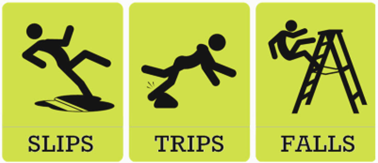
In this culture, falls are often not taken seriously. Falls are accidents which often cause injury and lost time. Falls can often be fatal. In the past, workers involved in falls lost a median of 8.5 workdays because their accidents. Injuries from falls may include cuts, bruises, muscle sprains and strains, broken bones, and back injuries.
Slips, trips, and falls are a major cause of workplace injuries. Unsafe conditions and behaviors, along with a lack of safety awareness, can lead to these types of accidents.

Slips often occur when employees are in a hurry or run, wear the wrong kind of shoes, or don’t pay attention to where they’re walking.
Follow these safety precautions in order to avoid a slip:
- Practice safe walking skills. If required to walk on wet surfaces, take short steps to keep your center of balance under you and point feet slightly outward. Move slowly and pay attention to the walking surface.
- Clean up spills right away. Whenever you see any kind of spill, clean it up yourself or report it to the appropriate person.
- Don’t let grease accumulate at your jobsite.
- Be more cautious on smooth surfaces.
Wearing the right shoes helps. One of the best ways to help prevent slip, trip, and fall injuries is to increase friction between your shoes and the walking surface.
OSHA requires that workplaces be kept clear of scrap lumber/metal studs/conduit, etc. Floors must be dry and free of protruding objects such as nails, splinters, holes, or loose boards.
A trip can happen when your work area is cluttered, when lighting is poor, or when an area has loose footing.
Follow these safety precautions in order to avoid a trip:
- Make sure you can see where you are going. Carry on loads where you can see over.
- Keep work areas well lit. Use a flashlight or extension light to make your walking area visible in unlighted area.
- Keep your jobsite clean and do not clutter passageways or stairs.
- Arrange equipment away from walkways or pedestrian traffic.
- Extension or power tool cords can be dangerous tripping hazards.
- Eliminate hazards due to lose footing on stairs, steps, and floors. Uneven walking surface, broken pavement or loose floorboards can also catch a foot and cause a fall.
Falls
Falls are caused by makeshift ladders, misuse of ladders, accidents while climbing, and improper scaffolding use. Most falls are slips and trips at ground level but falls from greater heights pose much higher risk of serious injury. Falls from ladders in the electrical industry are caused by electric shock.
Follow these safety precautions in order to avoid a trip:
- Don’t jump. Lower yourself carefully from trucks or work stages.
- Check lighting. Make sure stairs and sites are properly lit.
- Repair or replace stairs or handrails that are loose or broken.
- Don’t store tools or equipment on stairs or in passageways.
- Wear good shoes with the appropriate non-skid soles.