Sudden inclement weather can rapidly encroach upon field personnel. Preparedness and caution are the best defenses. Field crew members performing work outdoors should carry clothing appropriate for inclement weather. Personnel are to take heed of the weather forecast for the day and pay attention to signs of changing weather that indicate impending storms.
Protective measures during a lightning storm include seeking shelter; avoiding projecting above the surrounding landscape (don’t stand on a hilltop – seek low areas); staying away from open water, metal equipment, railroad tracks, wire fences, and metal pipes; and positioning people several yards apart. Some other general precautions include:
- Know where to go and how long it will take to get there. If possible, take refuge in a large building or vehicle. Do not go into a shed in an open area.
- The inclination to see trees as enormous umbrellas is the most frequent and most deadly mistake. Do not go under a large tree that is standing alone. Likewise, avoid poles, antennae, and towers.
- If the area is wide open, go to a valley or ravine, but be aware of flash flooding.
- If you are caught in a level open area during an electrical storm and you feel your hair stand on end, drop to your knees, bend forward and put your hands on your knees or crouch. The idea is to make you not vulnerable by being as low to the ground as possible and taking up as little ground space as possible. Lying down is dangerous since the wet earth can conduct electricity. Do not touch the ground with your hands.
- Do not use telephones during electrical storms, except in the case of emergency. Remember that lightning may strike several miles from the parent cloud, so work should be stopped and restarted accordingly. The lightning safety recommendation is 30-30: Seek refuge when thunder sounds within 30 seconds after a lightning flash; and do not resume activity until 30 minutes after the last thunderclap.
- High winds can cause unsafe conditions, and activities should be halted until wind dies down. High winds can also knock over trees, so walking through forested areas during high-wind situations should be avoided. If winds increase, seek shelter, or evacuate the area. Proper body protection should be worn in case the winds hit suddenly, because body temperature can decrease rapidly.
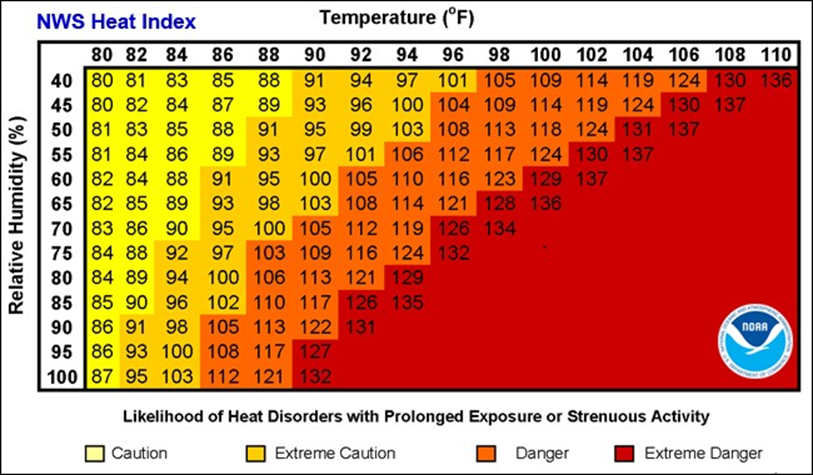
Heat Stress (heat cramps, heat exhaustion, heat stroke) Hazard
When you are working outside, extreme heat is not only uncomfortable…it can kill. Last year, thousands of workers in the United States got sick from exposure to heat on the job, and more than 30 workers died. These illnesses and deaths were preventable.
BEAT THE HEAT: THREE SIMPLE STEPS
Heat illness can be prevented. Remember these three things: water, rest, and shade.
- WATER: Drink plenty of fluids throughout the day. Do not wait until you’re thirsty to drink water. A good rule of thumb is to drink 4 cups of water every hour. It is best to drink a small amount of water every 15 minutes.
- REST: Rest breaks help your body recover.
- SHADE: Resting in the shade or in air-conditioning helps you cool down.
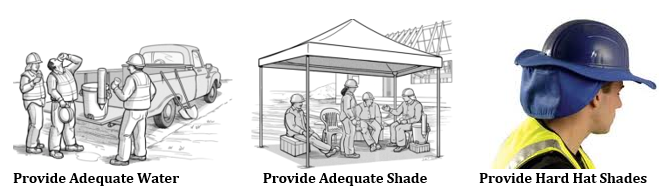
MORE STEPS TO REDUCE YOUR RISK
Here are some other ways you can prevent illness from the heat:
- Utilize Doggett Pre-Task Planning checklist and have all personnel acknowledge your expectations and means to protect your people.
- Report symptoms of heat illness right away.
- Wear light-colored cotton clothing.
- Wear a hat. Doggett Company provides hardhat covers for workers out in the elements to protect them from direct sunlight.
- Wear sunscreen to prevent sunburn.
- Watch out for your coworkers. Establish a “Buddy System”. Each worker should be assigned a partner to watch over each other. Write it in your Doggett Pre-Task Planning form.
- Know where you are working in case you need to call 911.
HEAT-RELATED ILLNESS: KNOW THE SIGNS
It is important to know the signs of heat-related illness—acting quickly can save lives.
Heat Exhaustion
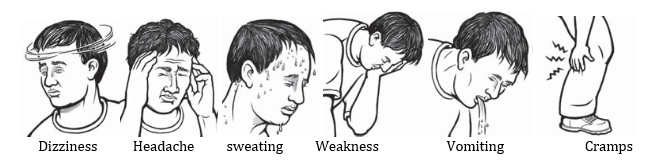
Heat exhaustion happens when your body loses too much water and salt through sweating. Symptoms may include headache, nausea, dizziness, weakness, fast heartbeat, thirst, and heavy sweating.
Heat fatigue, heat cramps, and heat rash are less serious, but they are still symptoms of over exposure to heat.
Heat Stroke
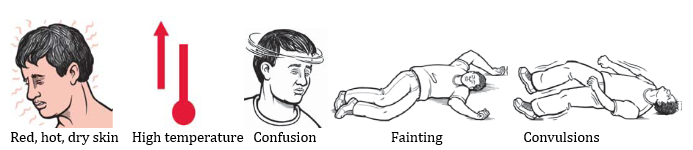
Heat stroke is the most serious heat-related illness. Usually, when your body builds up heat, you sweat to get rid of the extra heat. With heat stroke, your body cannot cool down. The symptoms include confusion, fainting, seizures, very high body temperature and hot, dry skin or profuse sweating. HEAT STROKE IS A MEDICAL EMERGENCY. CALL 911 if a coworker shows any signs of heat stroke.
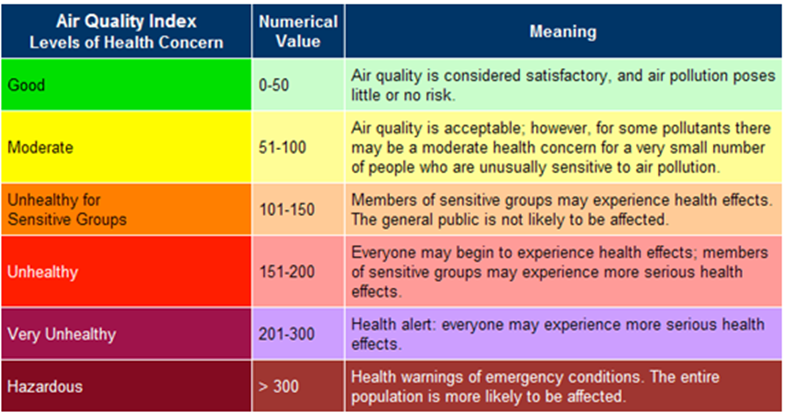
Air Quality Index Chart
Windchill Factor Chart
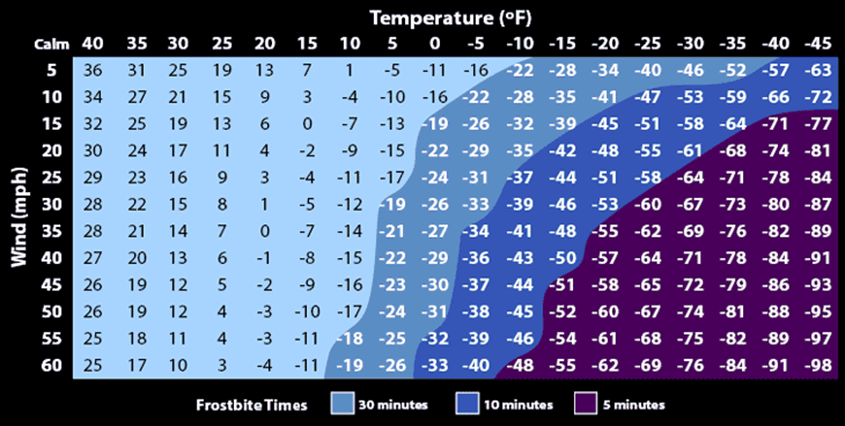
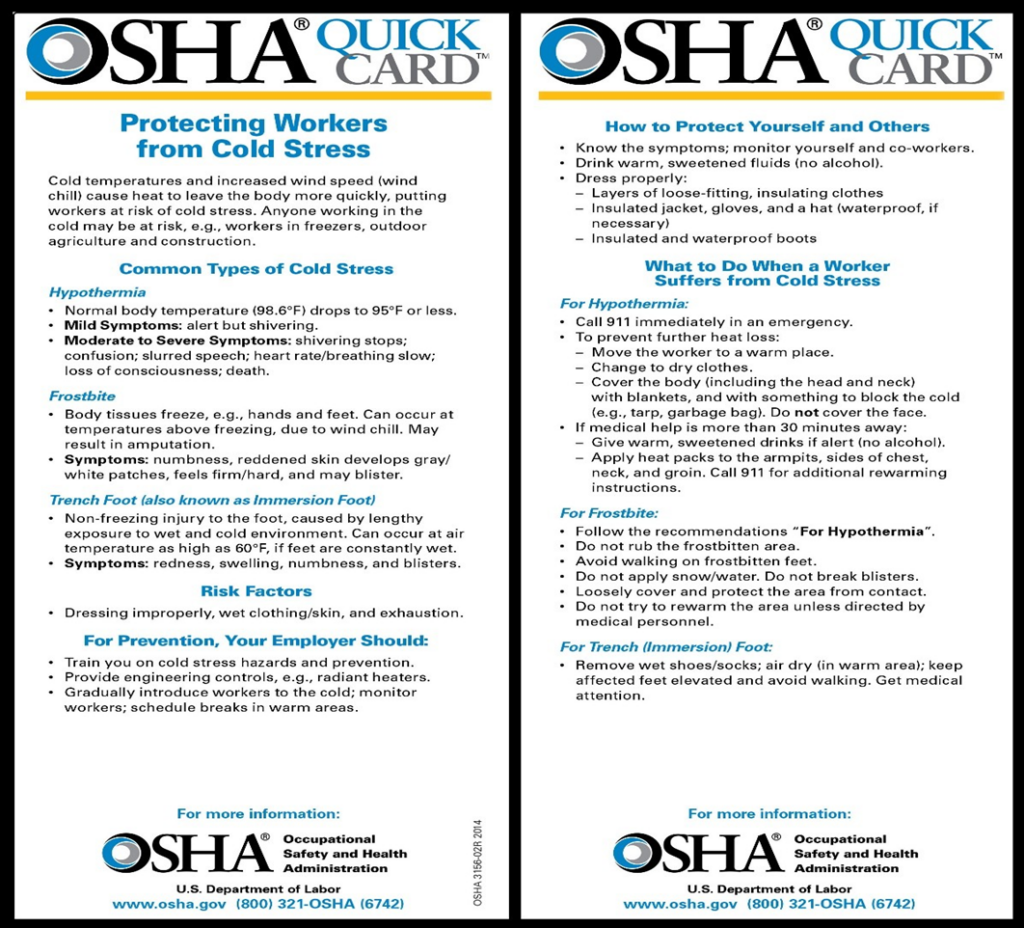
Prolonged exposure to freezing or cold temperatures may cause serious health problems such as trench foot, frostbite, and hypothermia. In extreme cases, including cold water immersion, exposure can lead to death. Danger signs include uncontrolled shivering, slurred speech, clumsy movements, fatigue, and confused behavior. If these signs are observed, call for emergency help.
OSHA’s Cold Stress Card provides a reference guide and recommendations to combat and prevent many illnesses and injuries. Available in English and Spanish, this laminated fold-up card is free to employers, workers, and the public. Below is OSHA’s Cold Stress Card.